
HOW IT WORKS
.png)
01
Waste is fed into the system
Unsold produce and organic waste are processed on-site, eliminating the need for transport or disposal.
02
Controlled bio-conversion
A contained anaerobic process breaks down organic material and releases energy-rich biogas.
03
Nutrients are extracted
Key nutrients such as nitrogen, phosphorus, and potassium are retained and converted into liquid organic fertiliser.
04
Valuable outputs are produced
Fertiliser and renewable energy are generated on-site, closing the loop and reducing reliance on external inputs.
We aim for a commercial solution, not a sustainability
SYSTEM OVERVIEW
Containerised modular system
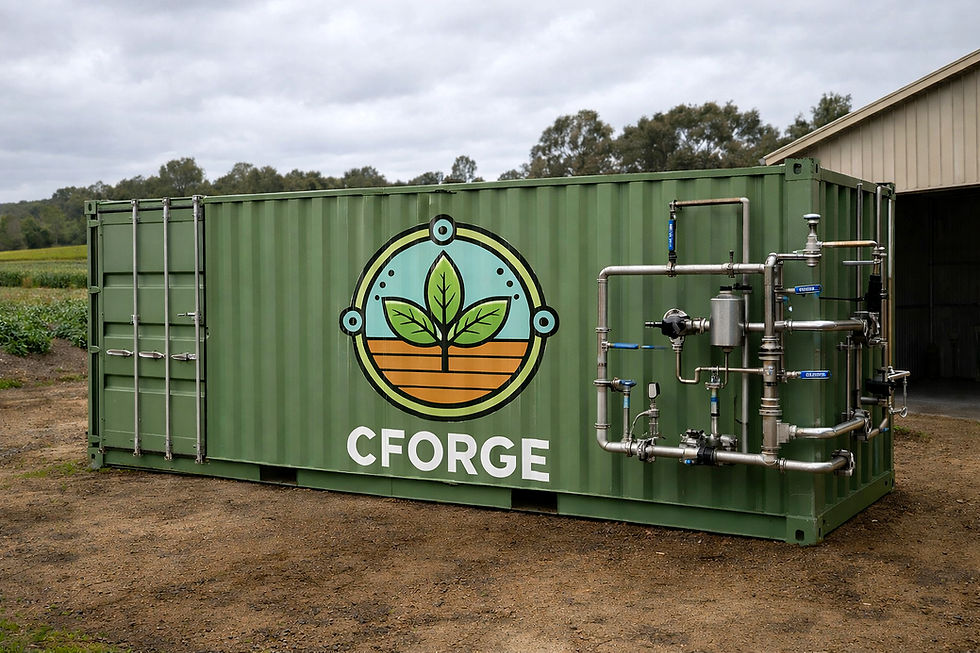
Containerised design
Standardised units that can be deployed directly on farms
Scalable
Sized to match farm waste volumes and growth over time
Low labour
Minimal operational input required once installed
Farm-ready
Built for real operating conditions, not controlled environments
Quick ROI
Designed to deliver economic value through cost reduction and resource recovery
CIRCULAR AGRICULTURE
Nutrients
Agriculture already operates on a nutrient cycle - but modern systems break that loop.
Crops require nutrients such as nitrogen, phosphorus, and potassium to grow. These nutrients are purchased as fertiliser, but they remain stored within the produce after harvest.
Waste
When produce is removed or wasted, those nutrients leave the farm.
What we call waste is not waste - it is stored value.
Value
Across Australia, horticulture waste contains thousands of tonnes of N, P and K, along with millions of litres of water and organic matter.
Recovering these resources helps farms reduce fertiliser purchases, lower input costs, and capture value that would otherwise be lost.
Circular agriculture is about keeping those resources working on the farm instead of throwing them away.
